Why a Big Decision Often Makes Things Harder, Not Easier, at First
When you have spent a long time working toward a difficult decision and finally take the step, the picture in your head usually goes like this: relief washes over you, things become clearer, and everything gradually falls into place. But the reality of the first weeks and months is often the opposite. Instead of relief — disorientation. Instead of clarity — questions that were not there before. Instead of confidence — the thought that maybe you made a mistake. This is a normal phase of transition, but it catches most people off guard because almost no one talks about it openly. The reason is simple: by taking the step, you have landed in a state where the old is gone and the new has not taken shape yet. This is a phase of uncertainty, and the human brain reads uncertainty as a threat — even when the decision was right. Add the disappearance of familiar structures, routines, environments, and tasks — and even if those things were not satisfying, they provided the predictability the brain was leaning on. Now that foundation has to be rebuilt, and that takes time.

What the J-Curve of Adaptation Is — and What It Looks Like in Real Life
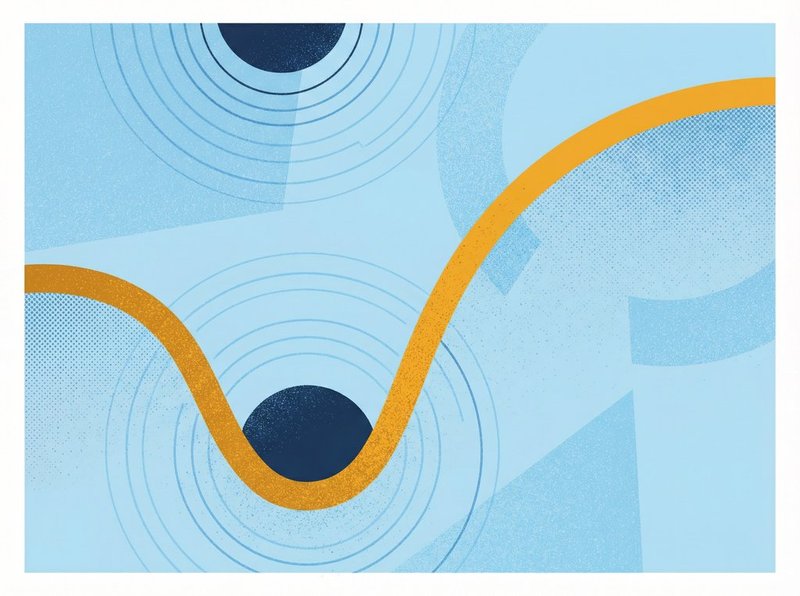
There is a concept in change management that describes what people go through during transitions very well. It is sometimes called the J-curve or the adaptation curve. The idea is simple: when someone goes through a significant change, their effectiveness, confidence, and general sense of wellbeing first drop — sometimes substantially — before they begin to climb again. Plot that on a graph and you get the letter J: first a descent, then a rise. In practice it looks like this: the first month after changing jobs, you feel out of your depth — unfamiliar with processes, do not know people yet, tire more quickly. The first months after a move, you feel isolated — no familiar places, no familiar people, no established routine. What matters is knowing about this curve in advance, because then you understand: this is not a sign the decision was wrong — it is the normal arc of any adaptation. Most people who do not know about it draw sweeping conclusions when they are at the lowest point of the curve.
Common Thoughts in the First Months — and What Is Behind Them
A handful of thoughts show up for the vast majority of people in the first phase after a big step. First: maybe I rushed and made a mistake. This thought almost always appears — and almost always reflects the J-curve rather than a real signal. Few people do not have it in the early months of a new chapter. Second: at least before, things were clear. Nostalgia for the familiar — even when the familiar was not good — is a natural response to uncertainty. It does not mean the old was better. It means right now is hard. Third: I am not handling this as well as I should be. New environments almost always put you in the position of a beginner, and comparing yourself now to yourself before is unfair. You are in a different context. Fourth: nobody understands what I am going through. This is often true — and it is one more reason to seek out people who have been through something similar.
How to Tell Temporary Discomfort from a Real Signal That Something Is Wrong
This matters because there is a real difference between hard but right and hard because something is genuinely off. Temporary discomfort looks like this: things are difficult, but you understand why. New environment, new rhythm, missing the familiar. There is a sense of direction, even if the path there is uncomfortable right now. A genuine warning signal looks different: you are not just worn down by the new — you are realizing that the new is fundamentally not what you wanted. For example, the new job turned out to be in a completely different format than described. Or the new city remains alienating after several months for some structural reason. The test is simple: when you think about your decision in a calm moment — not in the middle of stress — do you feel you are moving in the right direction, even if the path right now is rough? If there is any kind of yes, keep going. If the answer is consistently no and has been for months, it is worth reconsidering.
What Helps People Hold On Through the Hardest Part of the Transition
A few things consistently help people move through the most difficult phase of a transition without making hasty reversals. First — stability anchors. When everything around is new and unclear, it matters to have a few things that stay constant: a morning ritual, a form of exercise, catching up with a friend once a week. These small things signal to the brain that not everything has collapsed. Second — conversations with people who have already been through a similar transition. Their presence is a reminder that what you are feeling is not exceptional or catastrophic — it is a predictable phase. Third — lowering your expectations of yourself during the transition. You do not need to be maximally effective and confident right away. The first year after a major step is not the time for personal records. It is the time for adaptation.
When the Fog Starts to Clear: Signs That the Adjustment Is Going Right
The good news: the fog is not permanent. Concrete signs that the adjustment is moving in the right direction, even if you do not feel fully at home yet: First — a few familiar faces appear, people you have some kind of real connection with. At the new job, colleagues you can actually talk to. In the new city, one or two people you are genuinely glad to run into. This signals the social fabric is beginning to form. Second — your own routine starts to take shape. It is not perfect yet, but there is some structure and predictability. Third — you stop constantly comparing now and before. The new starts feeling simply like yours, not a substitute for what came before. Fourth — thoughts about the decision shift from anxious to neutral, or quietly positive. Not that everything is perfect and easy — but that you are on the other side of the hardest part of the curve.