
Why Money Is Not the Reason for Change — But It Shapes the Timeline
Your financial situation is rarely the real reason to change careers, move, or fundamentally rethink your life. The decision always comes from somewhere else — from desire, from necessity, from the feeling that you cannot keep going the same way. But money determines one very specific thing: when exactly you can make that move, and how comfortable the transition will feel. A person with a financial cushion and a person without one can make the same decision but live it out very differently. The first can take their time, make decisions without panic, and do things right. The second is often forced to grab whatever is available because the bills cannot wait. Building a financial reserve is not about money for its own sake. It is about having real options — not just the illusion of having decided to change something.
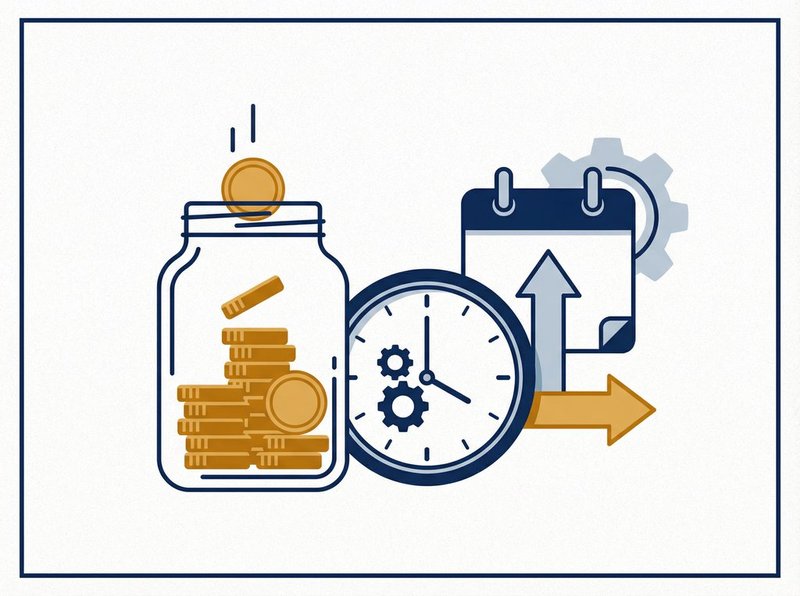
How Many Months of Reserve You Actually Need for Different Scenarios
The common advice to have three months of expenses saved was not designed for this — it was built for unplanned job loss. For intentional change, the numbers look different. If you are switching roles within the same field where you have a clear track record, three to four months is usually enough. If you are switching fields or moving into a position with a significantly lower starting income, plan for six to twelve months. Changing fields almost always means a temporary step back in earnings, and it helps to handle that without pressure. If you are combining a move with a job change or starting something of your own, plan for twelve months or more. That number sounds scary, but the key thing to understand is that this money will not disappear — you will just spend it more slowly. The real cost of being underprepared is the stress of financial instability layered on top of an already difficult transition.
How to Estimate Your Real Costs During a Transition Period
Most people planning a financial buffer start from their current monthly expenses. But transition periods often come with their own specific cost categories that are easy to underestimate. First, a move or job change almost always involves one-time costs: a new lease deposit, new transportation expenses, possibly new items for a new role or climate. Second, during transitions people tend to spend more on social activities and self-care simply because stress levels are higher and the need to decompress is greater. Third, if you are also learning something new or stepping into a lower-level role, income can drop significantly before it stabilizes. A realistic estimate: take your current monthly expenses, add 20 to 30 percent as a buffer for the unexpected and one-time costs, and multiply by the number of months you have identified for your scenario. That total is your real financial minimum.
What to Streamline in Advance So You Are Not Scrambling at the Worst Moment
There are things better handled while you still have stable income and a relatively calm head. First — review your fixed expenses. Subscriptions you barely use, services easily replaced by cheaper alternatives, spending that has become habit rather than necessity. This is not about austerity — it is about knowing your real minimum and having more room to maneuver. Second — look at any debt. If you can close short-term obligations before the big move, do it. Monthly debt payments on top of reduced income is extra pressure you are better off without. Third — if your situation allows, build the reserve gradually by setting aside a fixed percentage of income each month while things are stable. Even a small amount saved consistently adds up to a meaningful buffer over a year — and, just as importantly, it gives you the feeling of moving toward a choice rather than just waiting.
The Psychology of Money: When Finances Become an Excuse Rather Than a Real Limit
Some people genuinely face real financial constraints — no reserve, existing debt, people depending on them — and making a big move right now is objectively difficult. But others have more than enough to take the step, and money has quietly become a convenient reason for inaction. Not financially ready yet often means not psychologically ready yet, but this sounds more serious. How do you tell the difference? Ask yourself: if my account doubled tomorrow, would I move immediately? If yes, finances are the real constraint and it makes sense to focus on building the reserve. If instead a new reason to wait surfaces — I still have not figured out exactly where, or I need to think more — money is not the issue. And in that case it is more honest to acknowledge that and deal with what is actually holding you back.
A Simple Financial Plan for Anyone Getting Ready to Make a Big Move
A financial plan for a life transition does not have to be complicated. In simple terms it comes down to a few elements. First — define your minimum number: how much you need per month for basic comfortable living, nothing extra. This is your baseline. Second — figure out how many months of that minimum you need in reserve based on your specific scenario. Third — if you have that amount already or can realistically save it within a clear timeframe, you have your financial foundation. If not, build a simple savings plan: how much you set aside each month and how long it takes to reach the target. The fourth element — think through a backup plan: if the transition takes longer than expected, what do you do? Is there freelance work available? Can you temporarily reduce expenses? Is there someone who could help in a crunch? Having a backup plan is not pessimism. It is the kind of realism that makes it easier to move forward with confidence.